Saturday, 26 January 2013

Tracking Down Alice in Bluebeardland

An appreciation of the poet Gwladys Downes and a poem I've been hunting for 25 years

I loved the anthology we used in high school English class. At least I think I did. I remember reading things in it that weren't even assigned for homework, especially the poetry. Like many of my peers, I was hungry for culture, and here was a book with a variety of voices and experiences from the English Romantics to the American Modernists to Canadians doing their own renditions of Romanticism and Modernism. It was a book well suited to its purpose, and for anyone who bothered to open it, it offered an escape from the harsh pecking orders of secondary education and from the increasingly dismal environs of Sarnia, Ontario. 

Sarnia in the late 1980s seemed a cultural wasteland. It had a shopping mall, and it had a beach, so at least the possibility of pretending to live out to the shallowest "valley girl" lifestyle was there four months of the year--even if the perfunctory Californian subculture was already passé, it was still exotic in Canada's "chemical valley." Not that pop culture was a reliable distraction; there was a fluctuating number of movie screens in town, and Sarnia was not a frequent stop for a lot of concert tours. Even if you wanted to get lost in your work, you had your work cut out for you. Often literally. Jobs were being cut, and many industrial positions that meant pensions for baby boomers were already being converted to contract and temp work for the next generation. Getting a summer job cutting grass at a petrochemical refinery had become a coveted privilege for anyone aged 16 to 25. The downtown core was already showing signs of demise. But there was this book...

I can't remember the title of this book, or who the editor or publisher might have been. It has been almost 25 years, after all. I believe it was green, but that is a common enough colour for anthologies of English literature. I do remember that this book was instrumental in my discovery of poetry, and I first read many of my early favourites in its pages. There was E. E. Cummings' poem "Buffalo Bill's" and William Carlos Williams' poem "The Red Wheelbarrow" which I thought was hilarious at first until I realized how sad it really is.

It was in this book where I first read William Butler Yeats and Emily Dickinson and Stephen Crane along with so many other famous writers. And it was in this book where I first read a poem by Gwladys Downes.

Gwladys Downes was a Canadian poet and translator who had a long and distinguished career as a professor of French at the University of Victoria. She was not prolific in her output as a poet, publishing only four volumes over a career that spanned half a century. The sparseness of her output has likely meant that she is not as well known as some of her contemporaries like P. K. Page and Phyllis Webb, but she was a fine poet in her own right and did much to advance the art form beyond the writing of her own poems. In addition to her role as an educator, she was a passionate and active translator of Quebecois poetry into English.

For many years I knew nothing of Gwladys Downes' work as an academic or translator, and, to be quite honest, I knew nothing of her work as a poet beyond a single poem of hers that was included in my high school English literature anthology. The poem was called "Alice in Bluebeardland," and I remembered only that I loved it.  

As much as I tried, I could not remember the exact words of the poem, but I knew that it relayed the story of a girl who, having experienced some kind of metaphysical or existential horror, was forever altered in her ability to navigate the "real" world. I know that I likened it to the near-universal trauma of adolescence, and I appreciated the unsentimental appraisal of the damage done therein. It was a good poem to give to high school students, but this wasn't assigned reading. It just one of the many poems I discovered in this book, and its effects have stayed with me over the years.

I would sometimes look for books by Gwladys Downes in libraries and second-hand shops, but to little avail. I would occasionally happen upon House of Cedars, her last book of poems published in 1999, but never anything earlier than that, and so the poem "Alice in Bluebeardland" continued to elude me.

A few years ago, I began to search online in used booksellers' catalogues for Lost Diver, Downes' first collection published in 1955 by Fiddlehead Books, and for When We Lie Together, published in 1973 by Klanak Press, but these titles seemed to be lost to the digital age. Repeated searches of ABEbooks yielded only scattered postings for House of Cedars, which I had already acquired.

Recently, I asked several old classmates from high school if they could remember anything about our English anthology that might help me track it down, but none of them could remember any more than I could. Several weeks later, though, I tried ABEbooks again, and this time I was surprised by what I saw. There were a few listings for a Gwladys Downes book that I had not seen before: Out of the Violent Dark published by Sono Nis Press in 1978. I ordered it immediately, hopeful that "Alice" would be found inside.

The book arrived the other day, and I was instantly pleased with it. Other than some fading to the cover, and a strong, musty aroma of basement storage, the book was square and tight and in near fine condition. The volume itself was a de facto "new and selected" though not advertised as such. It contained poems taken from Downes' earlier collections as well as many of her translations of Quebecois poems that had appeared in various periodicals and anthologies over the years. And to my absolute glee, there it was on page 70, the very poem that I had been hunting for so long: "Alice in Bluebeardland."  

It was everything I remembered it to be: stark, vulnerable, vivid, and riddled with suspense. Here was a poem that I had fallen in love with almost 25 years ago, a poem that made the tedium of "chemical valley" more livable for a curious teenager, and that helped me (though I might not have known it at the time) find the path to a creative pursuit that would occupy the rest of my life.   

See for yourself.


Friday, 11 January 2013

I have a new poem in Taddle Creek Magazine


Taddle Creek Magazine has been good to me over the years, and I'm happy they wanted to publish one of my poems in their latest issue. They've got the poem up on their website now, so you can have a look without evening buying the magazine, which you should do anyway, because they have lots of great stuff.


Anyway, here's the poem:

Sugar Transformed By the Sun


“Whatever can / be destroyed is going to be destroyed. Patience, patience. / Hate what needs to be hated. All is finished. All’s completed.” —A. F. Moritz.


Skin. An eye. An ulcer. Whatever
can bleed will be torn by the nail
or the knife. Matter that ripens, that
rots, will be cuisine for the grubs.
If it can burn, be it paper,
or muscle, or coal, it will be ash
when the sun swells and reddens,
taking the inner planets into its bloom
when the apparatus falters.
Whatever can be destroyed

with a look, with a glance, will stand
before the basilisk, the gorgon,
or the cockatrice, and will petrify
as when the heat escapes, all at once,
from a face, from a forest,
and is swapped with layers of
many-coloured silica...

Read the whole poem here.


Friday, 21 December 2012

I have a new poem on The Week Shall Inherit the Verse

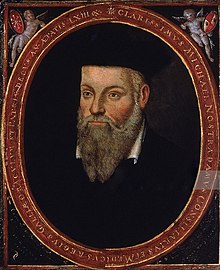
Just in time for the end of the world: my poem "What the Prophecy Could Not Foretell" appears today on Stuart Ross's weekly poem site The Week Shall Inherit the Verse.

This is how it starts:

WHAT THE PROPHECY COULD NOT FORETELL

The new sports set up again in Gaul,
After victory in the Insubrian campaign:
Mountains of Hesperia, the great ones tied and trussed up:
Romania and Spain to tremble with fear.

— Nostradamus
 

That the layoff notice would come
on a Friday. That the palpitations
would be caused by coffee. The inventor
of a childhood protected by monsters
would die of an acute case of ghosts.
There was no warning at all, no signs
in the flight of birds, no dreams
to caution us: the eggs would all be broken,
the Internet slow. ESPN has announced
the new sports set up again in Gaul...

To read the rest of the poem, visit The Week Shall Inherit the Verse! 


Thursday, 29 November 2012

My poetry course at the University of Guelph runs from January to March

My eight-week intensive poetry writing course at the University of Guelph's Centre for Open Learning and Educational Support starts in January. There's plenty of time to register. 

Click here for details.

Tuesday, 6 November 2012

I have a new poem on the website Canadian Poetries


Please visit the website Canadian Poetries to read my new poem "The Unseen World".

Here's the first stanza:

The Unseen World


There was the Hudson—more like the flash
of a sword-blade than a noble river.
The little island of Manhattan, set like a jewel
in its nest of rainbow waters, stared up into my face,
             and the solar system circled about my head!
                     —Helen Keller describing “the view” from the Empire State Building
If you are born to it, there will be no oblivion,
born from one tight womb into another,
as through a door that opens on a different
unmarked door, and then onto a room
with no walls. As though slipping from a basin
filled with ink into a Martian silence, to a depth
where you assume invisibility beneath an ocean
of no light. But look, there’s no oblivion here,
no brusque deletion, only the panic of being found,
of being touched by the limb of something
swimming near you. Don’t you see? Nothing
has been removed from your experience,
only added. First, there was the word for water.
There was the Hudson—more like the flash

Click here to read the whole poem.

Friday, 26 October 2012

The Al Purdy A-frame is saved! But the work has just begun and donations are still needed

A press release from the Al Purdy A-frame Trust:


A NEW LIFE FOR THE AL PURDY A-FRAME

Work now turns to RAISING FUNDS TO UPGRADE AND INSTALL a writer-in-residence

October 26, 2012

For immediate release

AMELIASBURGH, Ont. – The A-frame home built here in 1957 by the late Al Purdy, one of Canada’s greatest poets, and his wife, Eurithe, has been assured of preservation and a continued vocation as a place for writers to gather and work.

Thanks to the generosity of Eurithe Purdy, who dramatically reduced the asking price for the property, and donors from across Canada, the A-frame was acquired on October 9 by the Al Purdy A-frame Association, a newly incorporated national non-profit organization with a mandate to promote Canadian literature and Canadian writers. A major benefit is planned for Koerner Hall in Toronto on February 6th to continue the restoration of the A-frame.

“Now we can turn our attention to the next phase of this effort,” said Jean Baird, president of the association. “It’s not only a celebration of Al Purdy’s legacy, but a mission to educate today’s students on the value and worth of Canadian literature, and to preserve the Purdy home as a retreat for future generations of Canadian writers.”

The A-frame, a lakeside cottage in Prince Edward County, was the centre of Purdy’s writing universe and one of the most important crossroads on Canada’s literary map. In their 43 years residing there, the Purdys hosted a who’s who of Canadian authors: Margaret Laurence, Milton Acorn, H.R. Percy, Michael Ondaatje and hundreds of others.

The association plans to begin work on upgrading the property immediately, and hopes to have its first writer-in-residence installed next summer and working in local schools by fall 2013.

Donors acknowledged

The association gratefully acknowledges the generosity of all donors to the project to date, including writers, poets, publishers, academics, students, booksellers, librarians, lovers of literature and, especially, Eurithe Purdy, who was crucial to the success of this effort.

Special thanks are extended to major donors ($5,000 to $40,000): The Good Foundation, Avie Bennett, George Galt, The Chawkers Foundation, The Glasswaters Foundation, The Metcalf Foundation, Michael Audain, Jeff Mooney and Suzanne Bolton, Leonard Cohen, Rosemary Tannock, Tom and Helen Galt, and Josef Wosk.

For a full list of donors, go to www.alpurdy.ca.

Fundraising efforts continue and are critical to the next stage of this project—upgrades on the property are required and the association will be building an endowment. Online donations are being accepted through PayPal at www.alpurdy.ca, or cheques may be sent to: The Al Purdy A-frame Association, 4403 West 11th Avenue, Vancouver, B.C. V6R 2M2.

For further information:
Jean Baird
or 604-224-4898

Tuesday, 23 October 2012

I'll be reading with two visiting Russian poets this Friday

I'm reading at this event. Please come.
Debut Prize Presents: Rising Russian and Key Canadian Poets
Poets: Beatriz Hausner, Ksenia Marennikova, Kirill Korchagin, Paul Vermeersch.
Moderators: A.F. Moritz, Christopher J. Barnes
Cost: Free!
Join this event on Facebook!
Two rising figures in Russia's poetic scene, Ksenia Marennikova and Kirill Korchagin, among the newest and most provocative voices in their country's rich poetic tradition, come to the Hart House Library at the University of Toronto. These acclaimed young poets read from their work, discuss the variety and richness of contemporary Russian verse, and consider their art and its role in Russia's volatile political and social realities. Reading alongside them will be key Canadian poets Beatriz Hausner and Paul Vermeersch whose work, in breadth of vision and acclaim, both complements and contrasts with that of the Russian poets in interesting and revealing ways. Notable literary experts A. F. Moritz and Christopher J. Barnes will moderate....

See the original posting.